

The Beautiful Game (of Investing)
Every four years, the FIFA World Cup reminds us that championships are rarely won by the most talented team alone. They are won by the team that adapts to changing conditions, survives moments of adversity, and remains committed to its game plan.
Investing is remarkably similar.
Markets spent the quarter moving from one headline to the next - trade negotiations, inflation data, geopolitical conflict, fiscal policy debates, earnings reports, and ever-changing expectations surrounding interest rates. Like a World Cup match played at a frantic pace, every possession seemed to carry enormous significance.
AI Theme Heads into Extra Time
Artificial intelligence remained one of the dominant investment themes, continuing to reshape expectations for productivity and corporate profitability. Capital spending on AI infrastructure accelerated, while companies across nearly every industry raced to demonstrate how they intend to benefit from the technology.
Meanwhile, earnings growth broadened beyond the handful of mega-cap leaders that carried markets for much of the past two years. Broader participation is generally a healthier sign, suggesting the economic expansion may have more support than headline indexes alone would indicate.
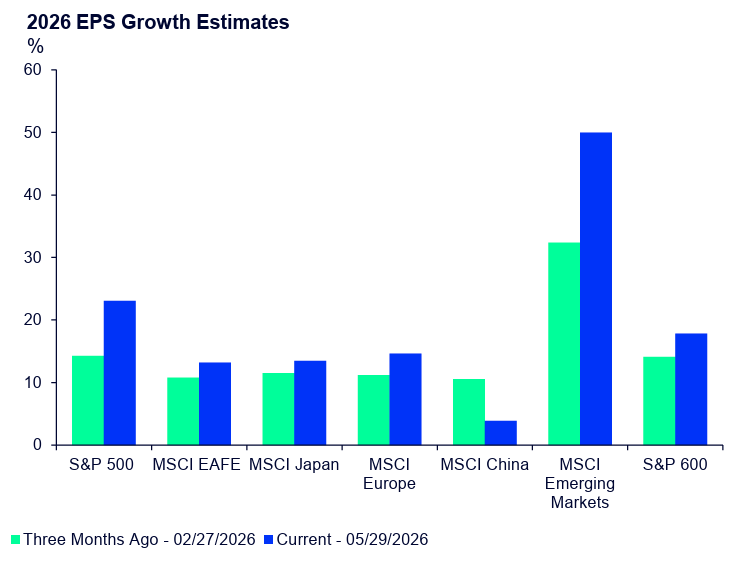
Source: State Street Investment Management Chart Pack, Underlying Data: FactSet, as of May 29, 2026.
Yellow Cards
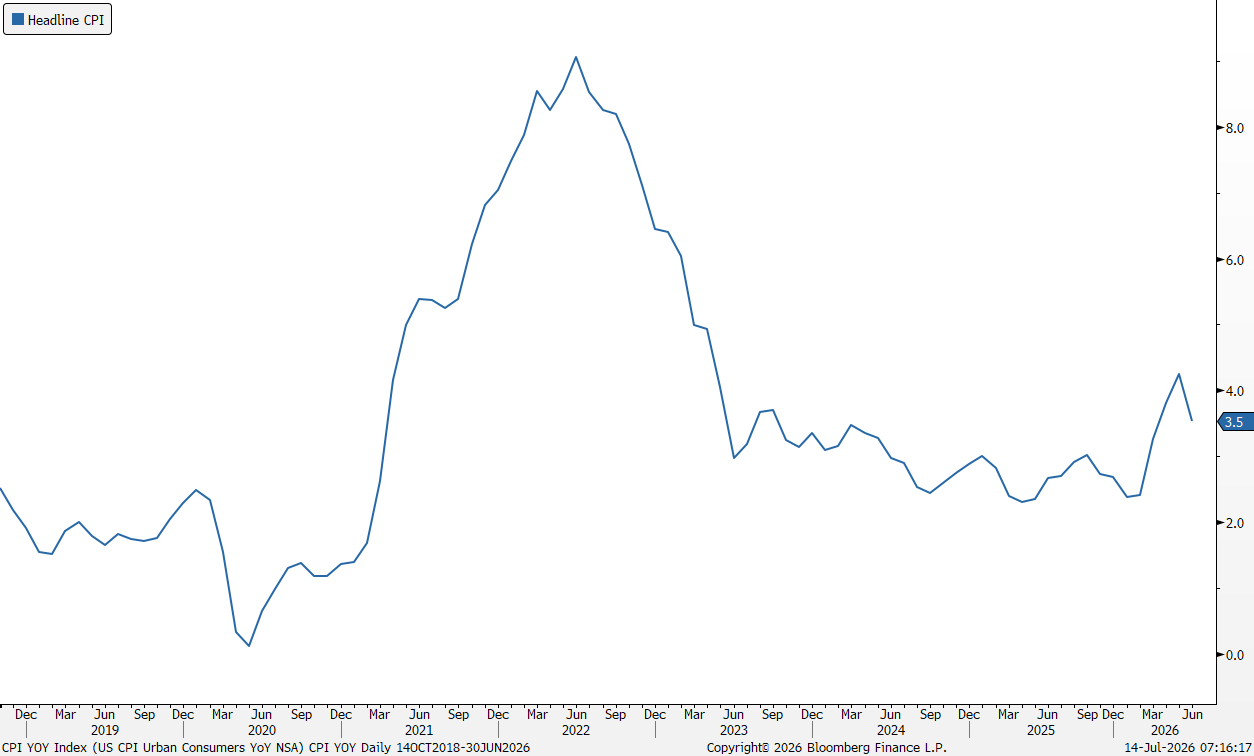
Inflation hasn’t been sent off the pitch, but it certainly received another caution as price pressures that had been moderating suddenly reversed course.
Source: Bloomberg LP
Earlier in the year, prices continued to moderate, allowing investors to increasingly anticipate eventual Federal Reserve rate cuts. Policymakers have remained cautious, reminding markets that declaring victory too early could result in another flare-up. New Federal Reserve chairman Kevin Warsh appeared to strike an anti-inflationary tone in his early days at the Fed. Like a player sitting on a yellow card, the Fed has had to remain disciplined - balancing muted job growth with renewed inflation concerns - knowing another policy misstep could change the direction of the match.
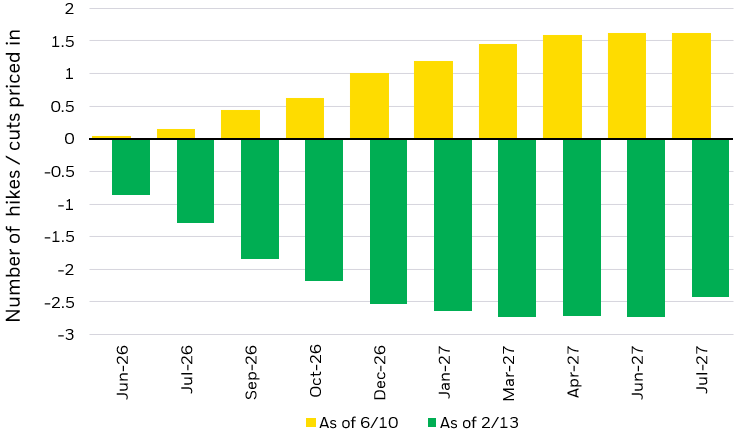
Source: iShares Market Trends - June Edition, Underlying Data: Bloomberg, as of 6/10/2026. Implied forecasts as represented by Fed Funds Futures.
Consumers also earned a yellow card. Spending has remained healthy overall, but cracks have begun to appear among lower-income households as higher borrowing costs and persistent price levels weigh on budgets. Consumer resilience has been impressive, but not unlimited.
Red Cards
The quarter also reminded investors that geopolitical events can quickly alter the game.
The war with Iran continues with no easy resolution on the horizon. Iran effectively controls the Strait of Hormuz – blocking the transport of oil and continuing to roil global energy markets.
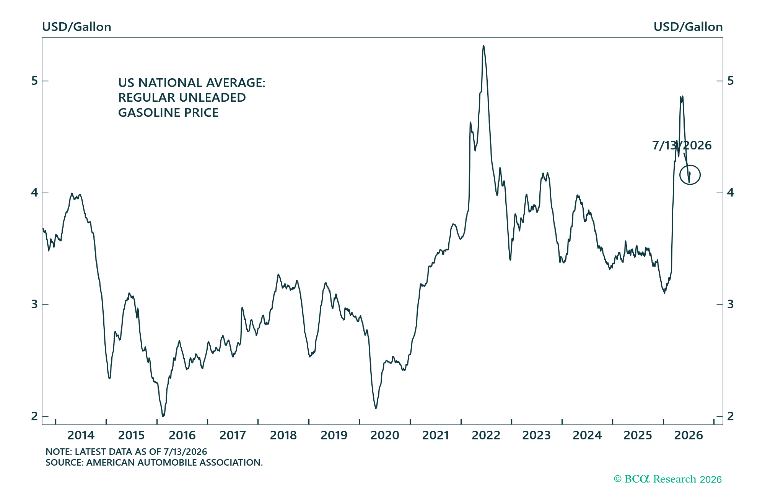
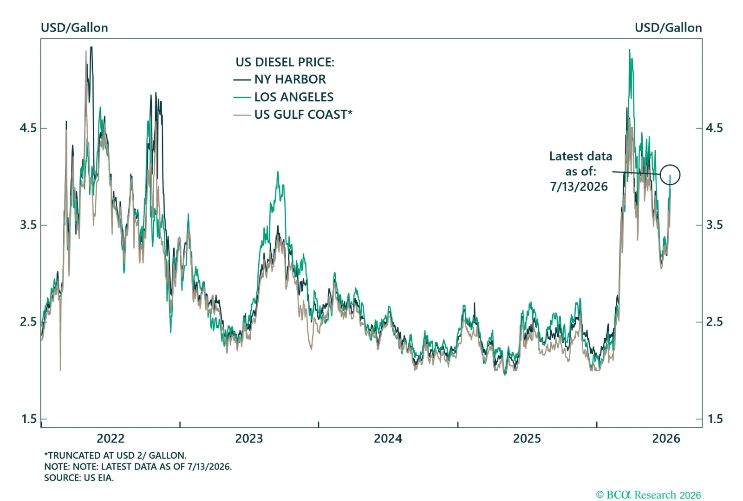
Source: BCA Research, Iran Conflict Daily Dashboard as of 7/13/26
Financial markets have been surprisingly resilient, pricing in a near-term end to the war as U.S. midterm elections approach and the administration feels the pressure to address affordability concerns before voters head to the ballot boxes. Republicans up for reelection are keen to end this war before they are issued a red card by their constituents and removed from office.
The market also issued a figurative red card to companies that failed to meet lofty earnings expectations and took on debt to fund capital expenditures. After several years of exceptional performance from mega-cap technology companies, investors became far less forgiving of even modest disappointments. Return on invested capital will become increasingly important to near-term equity returns the longer the AI buildout continues.
The Market’s “Own Goals”
Several of this quarter’s biggest market headwinds were largely self-inflicted – resembling classic “own goals”. In a 6-3 decision, the Supreme Court struck down President Trump's sweeping global tariffs, ruling that the 1977 International Emergency Economic Powers Act (IEEPA) does not grant the president authority to unilaterally impose tariffs. In response, Trump promptly implemented a new 10% global tariff under Section 122 of the 1974 Trade Act. Renewed tariff rhetoric and evolving trade policy created unnecessary uncertainty for businesses planning capital expenditures and supply chains.
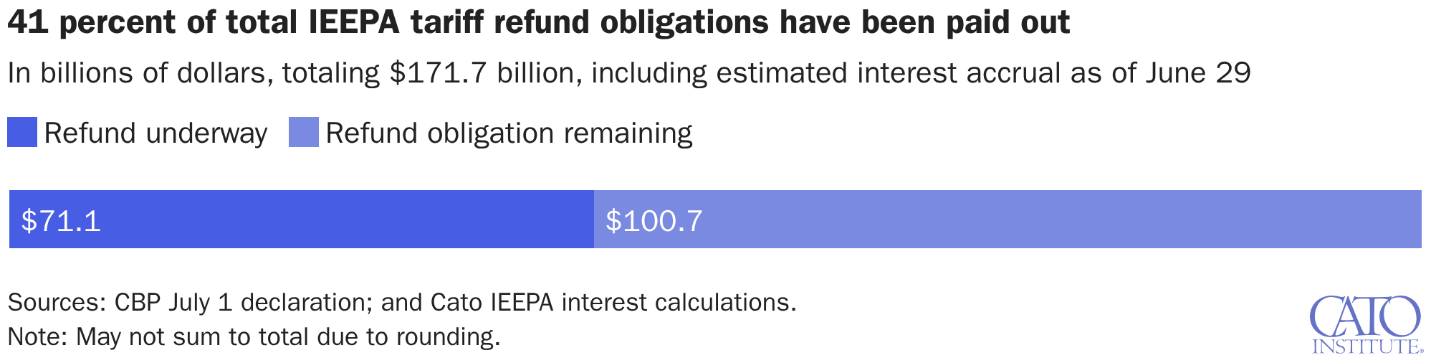
Source: Cato.org - IEEPA Tariff Refunds Update: Good Progress, but Still a Ways to Go, 7/9/26
Glass half full - tariff refunds are already being issued to companies large and small, returning billions of dollars collected that should begin to show up in earnings and provide a tailwind to the economy.
Glass half empty – these refunds are also lost government revenue that was offsetting Washington’s growing fiscal deficits and rising interest costs that are becoming increasingly difficult to ignore, even if markets have largely looked past them for now.
Full Time...But Not the Final Whistle
As we enter the second half of the year, investors will continue watching familiar storylines: inflation, Federal Reserve policy, corporate earnings, fiscal sustainability, geopolitical developments, and the ongoing evolution of artificial intelligence.
There will undoubtedly be moments that resemble breakaways, questionable penalty decisions, and even the occasional red card. Markets, like football, have a remarkable ability to test conviction precisely when remaining disciplined matters most.
The teams that lift the World Cup are rarely those who play the perfect match. They are the ones who consistently make sound decisions over the course of an entire tournament.
Our objective has never been to win every trading day, every quarter, or even every year. Our objective is to build portfolios capable of advancing through every stage of the tournament - regardless of weather, venue, or opponent - and ultimately reaching our clients' long-term financial goals.
Thank you, as always, for your continued confidence and trust.
Manhattan West Asset Management, LLC (“MWAM”) is an SEC registered investment adviser located in California. MWAM may only transact business in those states in which it is notice filed or qualifies for an exemption or exclusion from notice filing requirements. This summary should not be construed by any consumer and/or prospective client as MWAM’s rendering of personalized investment advice. Any subsequent, direct communication by MWAM with a prospective client shall be conducted by a representative that is either registered or qualifies for an exemption or exclusion from registration in the state where the prospective client resides. For information pertaining to the registration status of MWAM, please contact the United States Securities and Exchange Commission on their web site at www.adviserinfo.sec.gov. A copy of MWAM’s current written disclosure brochure discussing MWAM’s business operations, services, and fees is available upon written request.