
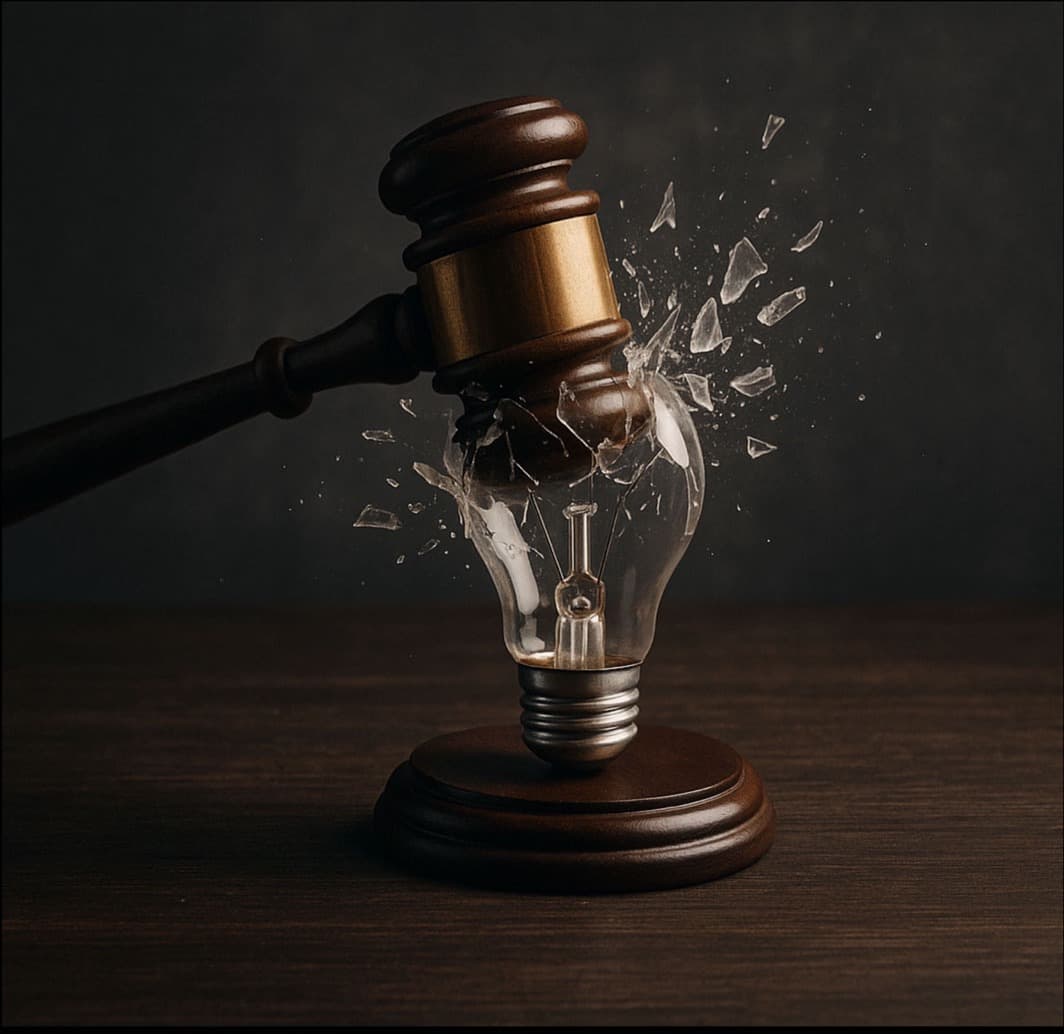
A global legal debate over copyright, fair use, and the definition of intellectual property has emerged as large language models and generative AI systems have surged in adoption.
With major lawsuits testing the boundaries of data ownership, including suits brought by a leading U.S. newspaper and a major stock-photo licensor against generative AI developers, the stakes are high. A single ruling could redefine how creative industries operate, how AI models are trained, and who profits from artificially generated content.
Why It's Controversial
Copyright law was originally created to protect the replication and commercialization of original works. Generative AI doesn't replicate exactly; it is influenced by training data and user input. Large language models and image-generation systems require massive training datasets. Critics argue that unauthorized copyrighted material (books, articles, photos, audio, code) was scraped from the internet to train these models. Supporters counter that outputs are original unless they exactly replicate protected material.
Courts are being asked to decide:
- Are outputs trained on unauthorized copyrighted material fair use?
- Are copyright holders' rights infringed if an AI "derives" outputs from their work?
- Can copyright holders demand licensing fees even if outputs are unrelated to the training?
The Investor Angle
The unresolved legal battles and competitive dynamics surrounding generative AI create a distinct set of dilemmas for investors. Legal outcomes will determine which business models survive.
For AI startups and LLM businesses, three outcomes may emerge:
- Unrestricted Fair Use: Minimal legal barriers, explosive growth potential, low compliance costs
- Mandatory Licensing: AI companies pay for training data; favors large players with deep pockets, pressures smaller startups
- Output Restrictions: If unauthorized training is deemed legal but outputs require attribution or revenue splits with content owners
| Scenario | Legal Outcome | Competitive Moat | Investment Outlook |
|---|---|---|---|
| Best Case | Unrestricted Fair Use | Proprietary data & UX lead to defensible margins | High growth, strong valuations |
| Middle Case | Licensing required | Defensible only for incumbents with deep pockets | Consolidation, moderate upside |
| Worst Case | Licensing + output restrictions | Weak moats, commoditized outputs | Low ROI, high failure risk |
Trust & Adoption Risk
Even with a favorable regulatory outcome, widespread AI adoption depends on public and business trust. In healthcare, law, and finance, accuracy is non-negotiable. Trust barriers could slow adoption in these sectors regardless of legal rulings.
Investors must consider:
- Legal Pushback: Governments may enforce output standards, require disclosures, or apply liability frameworks
- Mass Integration Hurdles: Large enterprises take months or years to test and approve new technology
- Brand Liability Concerns: Businesses may avoid AI content if plagiarism or copyright infringement risk exists
The Core Question: Who Owns AI-Generated Content?
In most jurisdictions, AI-generated works without meaningful human authorship are not eligible for copyright protection. This creates an ownership paradox: if no one owns the output, can it be freely copied and commercialized by anyone? Can original rights holders claim a stake in outputs trained on their work?
If AI-generated outputs are ruled unprotectable, competitive advantage shifts from ownership toward speed, distribution, and brand trust, creating a crowded field where anyone can replicate content at minimal cost.
Implications for investors:
- Data Differentiation Arms Race: High-quality proprietary datasets may become the most defensible moat, but acquiring them is costly
- New User Challenges: Consumer loyalty will depend on platform stickiness and switching costs
- Race-to-the-Bottom Pricing: As outputs commoditize, margins compress across all players
Conclusion
The convergence of generative AI and copyright law will likely produce one of the most significant IP shifts since the printing press. Whether that results in the death of traditional intellectual property or its reinvention depends on legal rulings now in motion. The decisions made in the next 24 months will shape the economics of creativity and innovation for decades to come.