
Data centers are involved in almost every digital interaction, from streaming and e-commerce to banking and AI applications. With billions of dollars now backing the infrastructure behind them, the question for investors is shifting from "if" capacity constraints will bite to "when."
As the AI build-out continues, current data centers are facing mounting structural constraints. For investors, the binding constraint is no longer demand for compute: it's the infrastructure required to support it. With limited real estate, rising energy demands, and increasing environmental scrutiny, Big Tech is accelerating its exploration of alternatives beyond Earth.
From Niche Infrastructure to Digital Backbone
For decades, from the mainframe era of the 1960s through the early 2000s, data centers were primarily internal assets, owned and operated by large enterprises to support their own computing needs, before the rise of cloud infrastructure. As cloud computing gained widespread adoption after 2006, data infrastructure shifted from in-house data centers to hyperscale facilities that power cloud platforms and AI.
Scaling Challenges of Terrestrial Data Centers
The constraints facing terrestrial data centers are no longer purely operational; they are structural pressures that will increasingly influence where capital is deployed across AI infrastructure. As countries and companies race to expand their AI footprint, three bottlenecks are emerging.
Current Energy Constraints
Data centers are already consuming approximately 1.5% of global electricity. That figure is expected to double by 2030, equivalent to Japan's total current power consumption, according to S&P Global1 (April 10, 2025). This level of demand is beginning to strain local grids, delay project approvals, and increase the marginal cost of incremental compute. Access to reliable, scalable energy is becoming a gating factor for growth.
Water Intensity
AI workloads require significantly more cooling than traditional computing, making water a critical resource. Data centers rely heavily on water for thermal management, much of which is lost through evaporation, and the remaining water is often too contaminated for reuse in natural systems like rivers and lakes. According to Bloomberg2 (May 8, 2025), two-thirds of data centers built since 2022 are located in water-stressed regions, raising long-term sustainability concerns. Water is no longer a secondary consideration: it is an emerging constraint on capacity expansion.
Local Pushback
Finding sites for new data centers is becoming increasingly difficult. As of March 2026, $64 billion in projects have been delayed or blocked3, with 11 U.S. states introducing legislation to restrict new developments, per National Conference of State Legislatures4 (March 16, 2026). Local opposition is intensifying as communities push back on land use, energy consumption, and environmental impact. Compounding this, data centers are still largely regulated as real estate projects rather than strategic infrastructure, resulting in prolonged permitting timelines and inconsistent policy treatment.
These constraints are structural, not cyclical. They are unlikely to ease with time and instead will likely multiply as AI demand accelerates. As energy availability tightens, water constraints deepen, and local friction increases, the ability to scale terrestrial infrastructure becomes increasingly limited.
For investors, this marks a potential inflection point. Each phase of the AI value chain has shifted where returns accrue: from hardware to hyperscale platforms. The next phase may again redefine where capital flows, favoring approaches that can bypass terrestrial constraints altogether.
What Are Data Centers in Space?
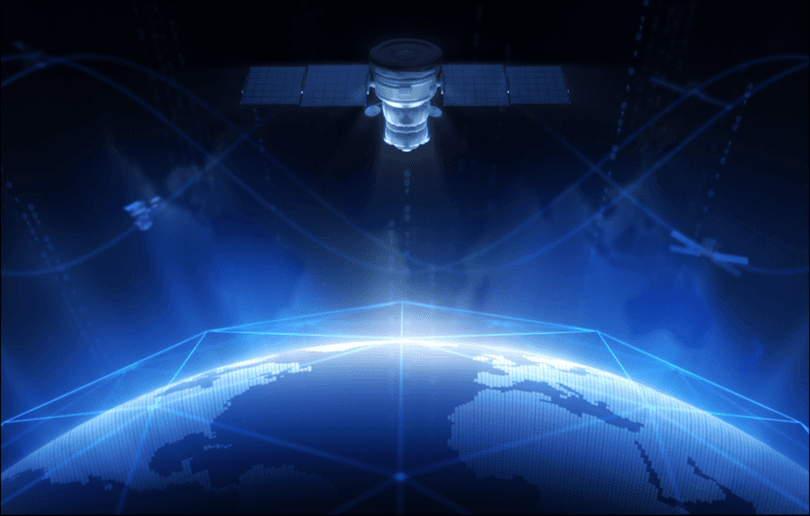
Data centers in space, or satellite-based computing systems, are servers deployed in low Earth orbit that process and store data outside of terrestrial infrastructure. These systems would be powered by solar energy through onboard panels and connected via satellite networks and emerging laser-based communications.
What was once a theoretical concept is becoming technically feasible as several enabling technologies mature simultaneously. Launch has become more commercialized and flexible, reducing the cost and friction of putting hardware into orbit. Small spacecraft can now support far more capable onboard computing, such as integrated processors and radiation-tolerant architectures.
Communications have also progressed meaningfully. NASA has demonstrated high-bandwidth laser-based data transmission over extreme distances, signaling a step change in the ability to move data between space and Earth. Early commercial experiments further reinforce this shift: initial deployments of edge computing devices and prototype orbital data processing systems have demonstrated that compute workloads can already be executed in space, albeit at a limited scale.
Meanwhile, the regulatory environment is beginning to evolve. Policymakers are taking steps to modernize satellite licensing frameworks to accommodate a faster-moving and increasingly commercial space economy. Together, these developments are moving orbital compute from a theoretical concept toward an emerging infrastructure category.
How Space Addresses Terrestrial Constraints
In theory, orbital infrastructure addresses three of the most binding constraints facing terrestrial data centers.
Energy Advantage
Certain orbital architectures offer near-constant solar exposure, creating the potential for a more continuous and predictable energy supply. This reduces reliance on constrained terrestrial power grids and may improve overall energy efficiency at scale.
Cooling Efficiency
Cooling alone accounts for up to 40% of total data center energy consumption, according to Harvard's John A. Paulson School of Engineering and Applied Sciences5 (May 23, 2024). Space provides a natural vacuum environment that enables passive radiative cooling, potentially reducing one of the largest operating costs in data center infrastructure. However, this advantage is not without complexity: extreme temperature fluctuations in orbit, driven by alternating exposure to sunlight and shadow, will require the development of advanced thermal management systems.
No Real Estate Constraints
Orbital infrastructure removes the need for land acquisition, zoning approvals, and local permitting. Capacity can, in theory, be scaled through satellite constellations rather than physical expansion, bypassing one of the most significant bottlenecks facing terrestrial deployment.
The Current Development Stage and Market Opportunity
Pre-Infrastructure Buildout Stage
We are still in the pioneer stage of data centers in space, similar to the earliest days of commercial cloud computing in 2006, or terrestrial data centers in the early 2000s.
Deployment
A California-based global technology holding company is reportedly targeting AI compute satellite launches by 2027, marking one of the earliest meaningful steps toward orbital infrastructure. Initial commercial deployments are targeted for the late-2026-to-2028 window, with broader scaling expected in the early-to-mid 2030s as the technology matures and deployment cadence increases.
Current Data Center Market Size on Earth
Revenue in the data center market is projected to reach $573.0 billion in 2026 and $739.05 billion by 2030, according to Statista6.
Space-Based Market Size
One physics-driven, constraint-based model estimates that the space-based data center market could reach approximately $39 billion by 2035. We'd note this figure comes from a single self-published technical paper rather than an established research provider, so it should be treated as a directional estimate, not a benchmark. While still modest relative to the scale of terrestrial data centers, this segment has the potential to capture disproportionate growth if Earth-based infrastructure continues to face mounting limitations around energy, water, and permitting.
Investor Dilemma: Balancing Vision and Reality
For investors, the opportunity in space-based data centers presents a classic timing dilemma. Enter too early, and capital may remain tied up for years without generating meaningful returns. Enter too late, and the most attractive opportunities may already be fully priced. As with prior phases of the AI value chain, the challenge lies not in recognizing the potential, but in identifying when that potential begins to translate into durable, investable infrastructure.
This tension is compounded by the gap between long-term potential and near-term visibility. While the total addressable market is significant, there is currently limited clarity around revenue models, pricing power, and margin structure. Without established benchmarks or comparable precedents, underwriting these investments requires a higher tolerance for uncertainty and a longer investment horizon.
In many ways, this remains an exercise in investing ahead of proof. The opportunity is defined by real long-term potential, but also by meaningful execution risk across technology, deployment, and regulation. Investors must weigh whether the current stage represents early infrastructure formation or ongoing speculation.
Access also remains constrained. Many of the most promising companies are private and early-stage, limiting exposure through public markets and concentrating opportunities within venture and growth equity channels. Despite these uncertainties, the scale of the opportunity and structural pressures on terrestrial infrastructure continue to attract capital, positioning this segment as an area of interest for long-duration investors.
Strategic Considerations for Investors Before Allocating Capital
Investing in space-based data centers requires careful evaluation of execution risk. Unlike terrestrial infrastructure, where delays can often be absorbed or mitigated, orbital deployments leave little room for error. Launch failures, delays, or hardware underperformance can materially set back timelines and capital deployment schedules. Success in these investments depends on precise execution, from launch cadence to system reliability, with limited tolerance for operational missteps.
Economic risks are equally significant. At present, there is no proven revenue model for orbital compute, nor are there established benchmarks such as service-level-agreement-backed contracts to anchor pricing, utilization, or margins. As a result, investors must underwrite these opportunities without clear visibility into how value will ultimately be captured or distributed.
Regulatory considerations add another layer of complexity. Increasing congestion in orbit raises the risk of collisions, which may prompt tighter regulatory oversight and new constraints on development. In addition, access to orbital slots and radio frequency spectrum is governed by international treaty through the International Telecommunication Union (ITU), a United Nations agency responsible for allocating satellite positions and coordinating spectrum usage. These regulatory frameworks introduce scarcity, but also uncertainty, particularly as commercial activity in space accelerates.
At current valuations, many of these risks are not fully discounted, in our view. In an asset class defined by regulatory scarcity and execution risk, early winners are likely to be those that secure orbital positioning, demonstrate visible revenue pathways, and execute on-time deployments. These factors will play a defining role in shaping the competitive landscape for decades to come.
Where Capital Is Flowing
As AI infrastructure evolves, capital is being deployed across multiple layers of the emerging space-based data center value chain, each offering distinct risk and return profiles.
At the foundational level, investment is concentrated in launch and space infrastructure, including rockets, satellites, and deployment systems. These assets represent the "picks and shovels" of orbital compute, enabling access to space and forming the backbone upon which all higher-layer services depend.
Further up the stack, capital is flowing into semiconductors and AI compute designed specifically for the space environment. This includes the development of radiation-resistant GPUs and TPUs capable of operating reliably in orbit, addressing one of the core technical challenges of deploying compute infrastructure beyond Earth.
Energy and power transmission are also emerging areas of investment. Space-based solar power systems offer the potential for continuous energy generation, with some companies exploring technologies to beam that energy back to Earth. While still early, this layer could play a meaningful role in supporting both orbital and terrestrial energy needs.
At the highest and most speculative layer sits SaaS and orbital cloud: the concept of compute-as-a-service delivered directly from space. While furthest from commercialization, it is widely viewed as a potentially high-margin segment, assuming the underlying layers are successfully established.
Conclusion
As terrestrial constraints tighten (limited land, growing local opposition, and increasing environmental scrutiny), Big Tech is looking beyond Earth for its next generation of data centers.
While still in its early stages, the shift from Earth-bound to orbital compute represents one of the newer frontiers in digital infrastructure. In our view, the opportunity for investors here isn't immediate ROI: it's early positioning in what could become a foundational layer of AI infrastructure, for those with the patience and risk tolerance the category demands.